El Paso runs an annual average of 41.3% relative humidity with a dew point of 35.4 °F. Hold 35–45% indoors and the rest of this page is how.
- Annual relative humidity
- 41.3%
- Annual dew point
- 35.4 °F
- Annual rainfall
- 8.8 in
- Sunny days
- 302
- Indoor target
- 35–45%
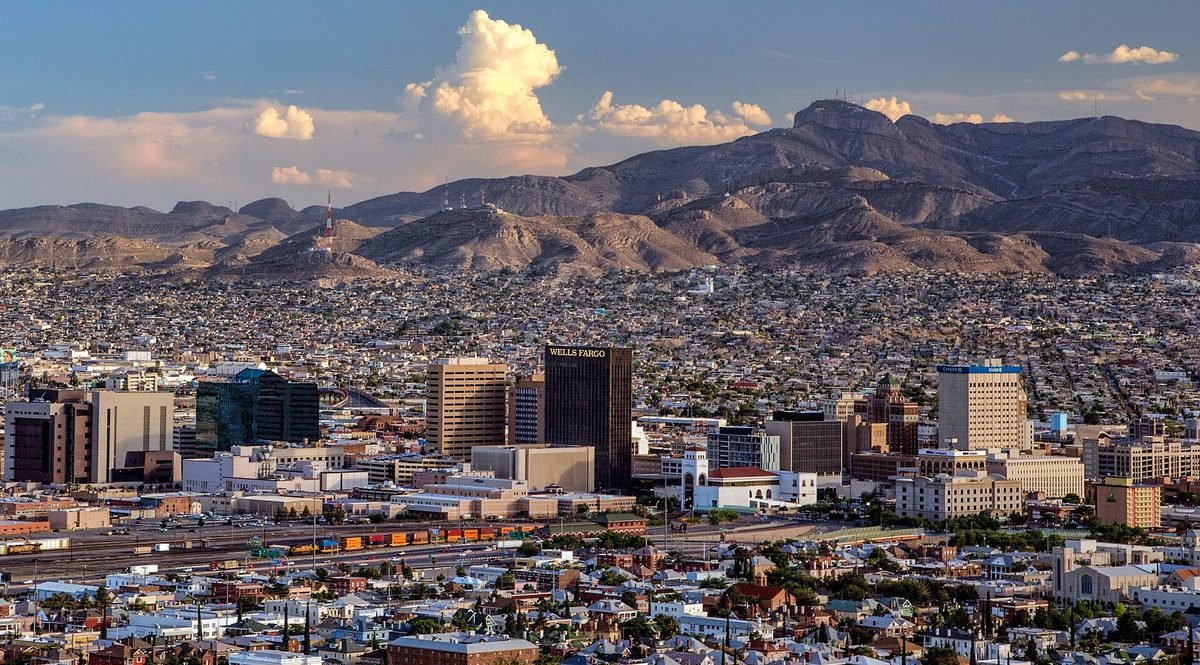
The climate, in numbers that matter to a building
El Paso has a hot desert climate (Köppen BWh), and that single classification reverses most of what is written about indoor humidity. With an annual mean relative humidity of 41.3% and a mean dew point of 35.4 °F, the outdoor air here carries roughly a third of the water that Gulf air does. Dehumidification, the default answer across most of the United States, is essentially never the right purchase in this city.
The exception is the North American monsoon, which delivers much of the annual 8.8 inches between June and September. During those weeks dew points climb and the city briefly feels humid by local standards — which is still drier than an average day in Dallas. It is enough to matter for comfort and for evaporative cooling performance, and not enough to create a mold climate.
What defines the rest of the year is dryness and sun: 302 sunny days, 83% of available daylight, and winters that are cool and arid. Heat that air to a comfortable indoor temperature and the relative humidity collapses into the teens, which is where the local problem set begins.
Through the year in El Paso
| Season | What the outdoor air does | What that does to a house here |
|---|---|---|
| Spring | Very dry and windy, with dust storms and gusts that can exceed 75 mph | Indoor humidity at its lowest; dust infiltration is a bigger complaint than moisture |
| Summer | Hot, with the monsoon raising dew points from late June | Evaporative coolers work superbly before the monsoon and struggle during it |
| Fall | Rapidly drying again after the monsoon breaks | The most comfortable weeks of the year, and the time to service humidification before winter |
| Winter | Cool and arid; heated air drops into the teens | Timber shrinks, static, dry airways. This is the season that damages the contents of a house |
What this climate does to a house here
The problems below are the ones that turn up repeatedly in El Paso specifically, rather than the general list.
-
Indoor air in the teens all winter
Air at 35 °F carries very little water. Bring it inside and heat it to 70 °F and the relative humidity can fall below 20% without anything going wrong. That is drier than most museums permit, and it is the normal condition of a heated El Paso house.
-
Timber, floors and instruments moving
Solid timber shrinks across the grain as it dries. Floorboards gap, panel doors crack along the joints, furniture joints loosen, and stringed instruments go out of tune constantly and occasionally split. Unlike mold, this damage does not reverse fully once it has happened repeatedly.
-
Evaporative coolers adding moisture on purpose
Swamp coolers are efficient and widespread here precisely because the air is dry — they cool by evaporating water into it. That works brilliantly for most of the year and fails during the monsoon, when the air is already too wet to absorb much, leaving a house that is warm, damp and stuffy.
-
Dust rather than damp
Spring dust storms drive fine particulate into buildings through every gap. The remedy — air sealing and filtration — is the same envelope work that helps humidity control, but the motivation and the season are completely different from the rest of the state.
-
The monsoon exception nobody plans for
For a few weeks a year, El Paso houses can genuinely feel humid, and swamp coolers make it worse. Because it is brief, almost nobody has a dehumidifier or a refrigerated backup, and it is the one time a small portable unit earns its keep here.
What is your reading telling you?
- Dew point
- 53 °F
- Mold risk, cold walls
- Moderate
Still inside the accepted range, but this is where cold surfaces begin to sweat.
Every fix that works here, cheapest first
The complete ladder for an El Paso house — inverted, because the problem is dryness. Where a coastal guide says remove water, this one says keep it.
Stop over-ventilating in winter
Outdoor air in January carries almost nothing. Every hour of open window in cold weather makes a dry house drier, and the heating then costs more as well. Ventilate for air quality, briefly, and close up afterwards.
Use the moisture you already make
Dry laundry indoors, leave the bathroom door open after a shower instead of extracting hard, and cook without lids. Every one of these is the opposite of the advice on the Gulf Coast, and here they are free humidification.
Seal the obvious air leaks
Weatherstripping doors, sealing the attic hatch and closing gaps around pipe penetrations reduces the constant infiltration of very dry outside air. It also keeps spring dust out, which is the more visible benefit locally.
A hygrometer in the room that matters
Dry-air problems are invisible until a floor gaps. A twelve-dollar unit in the room with the timber floor or the instruments tells you whether you are in the twenties, which almost everybody here is at some point in January.
Keep the swamp cooler maintained and monitored
Clean pads, correct bleed-off rate and a watch on indoor humidity. An evaporative cooler is a humidifier that also cools; when the outdoor air is already damp during the monsoon, it needs turning off rather than turning up.
A humidifier with a humidistat
The central piece of equipment for this city. Evaporative units cannot over-humidify and leave no mineral dust; ultrasonic units are cheaper and will coat a room in white powder unless you use distilled water, which local water hardness makes a real consideration. Set it to 40% and leave it.
A small dehumidifier for the monsoon only
Six to eight weeks a year. A 20-pint unit is ample, and it spends the rest of the year in a closet. Buying a large one for a desert city is the most common local overspend.
An HRV rather than an ERV
This is the one climate in Texas where the recommendation flips. A heat recovery ventilator transfers heat without transferring moisture, which is what you want when the incoming air is arid and you would rather keep the little humidity you have indoors.
Whole-house humidification and envelope work
A humidifier plumbed into the furnace and run from a humidistat holds the whole house rather than one room. Combined with air sealing and good filtration, it addresses dryness, dust and heating cost together — which is a better argument than any of the three on its own.
Local construction, and why it changes the answer
El Paso construction reflects the climate. Stucco over frame and adobe or block are common, walls are built for heat rather than for vapor management, and vapor barriers designed for humid climates can be actively wrong here — trapping the small amount of moisture a building does encounter on the wrong side of the assembly.
Evaporative cooling deserves its own note because it is unusual in the United States outside the Southwest and it changes the humidity picture entirely. A swamp cooler deliberately adds water to the indoor air, so a house running one is not dry in the summer at all. The strategy that follows is seasonal: humidify in winter, let the cooler humidify in summer, and switch to a refrigerated system or a small dehumidifier during the monsoon.
Finally, treat almost any national humidity article with suspicion here. Guidance written around a 50 to 60% indoor reading, mold on cold walls and the need for dehumidification describes a climate El Paso does not have. The 30 to 50% target still applies; every mechanism for reaching it runs the other way.
Common questions
Do I need a dehumidifier in El Paso?
Almost certainly not as standing equipment. With an annual mean relative humidity of 41.3% and a dew point around 35 °F, the ambient air is drier than the indoor target for most of the year. The genuine exception is the summer monsoon, when a small portable unit is useful for a few weeks — and a basement or a swamp-cooled room during that period is the only place it will collect much water.
What humidity should I keep a house at in a desert climate?
Aim for 35 to 45%, and treat 35% as a floor rather than a ceiling. Above 45% you gain nothing and start putting water on winter windows; below 30% is where timber moves, static appears and airways get irritated. The practical goal in El Paso is holding the bottom of the range rather than staying under the top of it.
Does a swamp cooler cause mold?
The cooler itself can, in its own pads and reservoir, which is why cleaning and bleed-off maintenance matter. In the house, it raises indoor humidity substantially — often into the fifties — and in a desert climate that is usually comfortable rather than dangerous, because surfaces are warm and the air outside is dry enough to carry moisture away. During the monsoon, when it cannot, that is exactly when the unit should be off.
Why do my wooden floors gap every winter here?
Because the room is spending weeks in the twenties or lower, and solid timber gives up moisture until it reaches equilibrium with the air around it. It closes again in summer, particularly if you run an evaporative cooler. What does lasting damage is the repeated cycling rather than any single dry spell — holding 35 to 40% through the winter with a humidifier is what stops it.
Sources
- US EPA — Mold and moisture guidance — the 30–50% range and the 10 sq ft remediation threshold
- ASHRAE Standard 55 — Thermal environmental conditions for human occupancy — indoor comfort and humidity limits
- US DOE 10 CFR 430 — Dehumidifier test procedure — the 2019 move to 65 °F rating conditions
- NOAA / NWS 1991–2020 Climate Normals, via the city climate tables on Wikipedia
- US Department of Energy — Building America climate zone definitions
- EPA — Indoor Air Quality: moisture control and mold
- DOE 10 CFR 430 — dehumidifier test procedure (2019 method)